

Did My Teardrop Tattoo Change My Mental Health
NMHIC Blog
Teardrop Tattoos, Prison house Life and Smart Justice
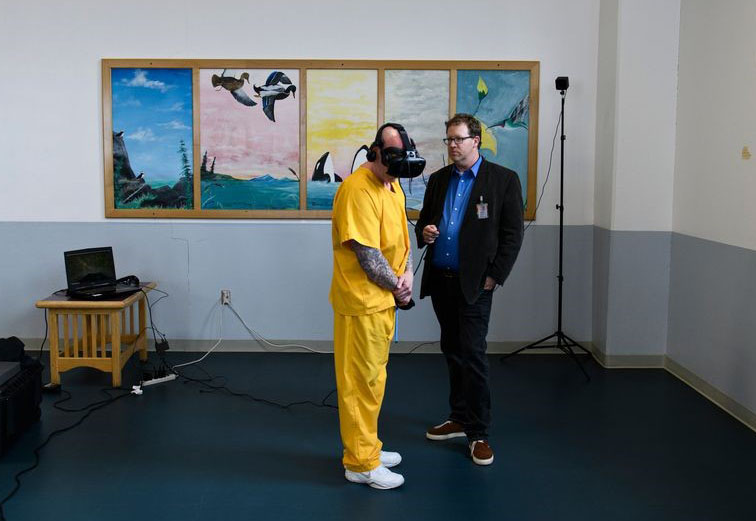
The teardrop tattoos on his confront were clues that the inmate was imprisoned for a serious vehement criminal offence, probably murder. He and the other inmates nosotros met were, conspicuously, not the usual people that we appoint in our quest for innovations in mental healthcare.
Equally we prepared to take virtual reality tools to the maximum-security Spring Creek Correctional Heart in Seward, Alaska, we had been somewhat unsure of what to expect and some on our squad were a fleck apprehensive. Merely, the Alaska Section of Corrections had invited usa, asked us to bring therapeutic virtual reality for a test, to get feedback from inmates and officials, every bit a first footstep toward evaluating VR'south potential to enhance prison safety and reduce recidivism after convicts had served their time.
Why prisons? Why convicted criminals? Why accept a cutting-edge tool – best known for gaming applications — to these people?
Correctional facilities in the United States are often considered the largest providers of mental health services. Co-ordinate to the Bureau of Justice Statistics, more than half of all prison and jail inmates alive with i or more mental wellness conditions, including substance abuse or addiction. But treatment options in correctional settings can be severely limited due to staffing, constrained health intendance budgets, location of facilities in remote areas and express mandates for intendance provision. For too many mentally ill inmates, the institutional option for protecting them from harm is to keep them in alone solitude, which makes their symptoms far worse.
The fifty-fifty larger cost is that individuals with untreated mental wellness and substance abuse atmospheric condition are at significantly higher risk for recidivism upon release from prison house or jail. Nearly all current inmates in Alaska will be released at some fourth dimension, and 2-thirds of them will somewhen render to prison house. The toll to gild of re-incarceration is substantial.
Addressing the mental health of incarcerated individuals and their successful reintegration to customs life presents an opportunity for innovation that balances public safety concerns with a commitment to recovery.
When we received a call from Alaska Department of Corrections (Physician) Deputy Commissioner Karen Cann, we were intrigued. Cann indicated they had a existent opportunity – the combination of progressive leadership interested in innovation that held the promise of amend results than they'd been getting from previous initiatives, grant funding (the Second Chance Recidivism Reduction Grant) and a legislative initiative to revisit their strategy for diversion and community re-entry. The Md wanted to make the nearly of this opportunity.
Alaska DOC deals with a huge geography with express transportation and broadband infrastructure, over-representation of Alaskan Natives in their incarcerated population, issues with housing and employment specially in the rural villages, severe shortages of behavioral health treatment providers, and the consequences of untreated or nether-treated substance abuse. Any one of these would nowadays a potent challenge.
Just nosotros were excited by the DOC staff'southward openness, their renewed efforts to reach out to and follow the guidance of Alaskan Native elders and other community stakeholders, and the dedication, feel and innovative spirit among DOC leaders.
Alaska's context, needs and avails were fertile footing for technology-based innovation. This could include technologies that might:
- sustain or re-establish of import social and cultural connections betwixt inmates and their dwelling house communities
- support more than effective treatment of mental illness and/or substance abuse
- prepare inmates who had been incarcerated for long periods of time to fix to handle changes in the outside world upon their release
- be used as function of the "restorative justice" process — in which convicted offenders develop empathy for their victims, the skills to manage conflict or resolve differences non-violently, and communicate with more honesty with victims or a community to make amends or be restored to "membership", e.g., in a tribe or clan
- be used for staff training
Today, nosotros are in affect with several technology firms who are very interested in sharing existing solutions for the corrections population. These firms working on hereafter tech tool design iterations are eager for input direct from inmates and their family unit and friends, those recently released dorsum into community life, and the corrections, probation and parole officers who interact with them regularly. Virtual reality tools, artificial intelligence-driven teaching or coaching tools, and emerging telecommunications products all may come into play.
Equally for the inmate with the tear drib tattoo? We don't know what he was convicted of, nor did we inquire. He, and all the inmates we encountered, had earned their chance to experience VR on that 24-hour interval through their skilful behavior records "inside the walls." They were polite to united states and interested in virtual reality, and virtually chiefly, provided united states of america with plenty insight to continue to the next steps in developing technologies to improve safety within prisons and in our communities to which convicts somewhen return.
We learned a lot during this initial visit to the prison. About importantly, we learned that using technology in incarceration isn't being soft on crime. It's smart justice.

Did My Teardrop Tattoo Change My Mental Health,
Source: https://www.cuanschutz.edu/centers/national-mental-health-innovation/news-media/nmhic-blog/nmhic-blog/teardrop-tattoos-prison-life-and-smart-justice
Posted by: reynoldsglearand.blogspot.com
0 Response to "Did My Teardrop Tattoo Change My Mental Health"
Post a Comment